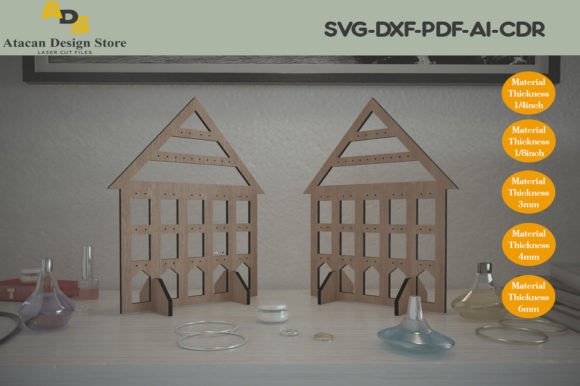
Laser Cutting Stands: A Designer's Review
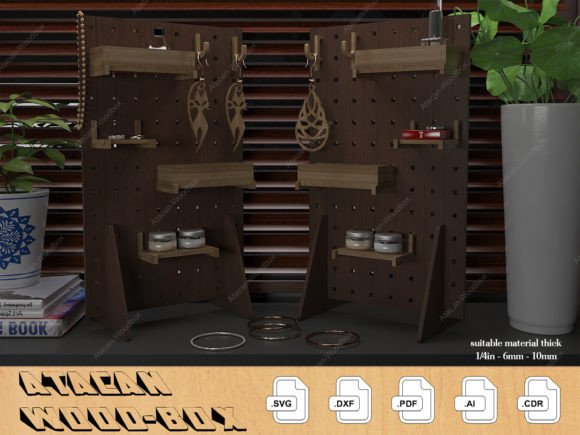
As a graphic designer who frequently bridges the gap between digital branding and physical product realization, my first impression of the Jewellery Stand Earing Holder Display was one of immediate practical potential. In an era where brand identity extends far beyond a logo on a website, the tactile experience of packaging and display is paramount. This asset immediately suggests a mood of curated elegance and artisanal precision. It feels less like a generic template and more like a foundational element for a boutique brand looking to elevate its unboxing experience. The visual language here speaks to the handmade business owner who values presentation as much as the product itself, offering a clean, modern design aesthetic that fits seamlessly into contemporary small business branding strategies.
Integrating Physical Displays into Brand Identity
When evaluating a graphic design asset intended for fabrication, I look for versatility. How does this piece perform when translated from a screen to a real-world object? The Jewellery Stand Earing Holder Display excels in scenarios where the physical environment acts as an extension of marketing visuals. Imagine a client launching a new line of sustainable earrings; this stand becomes a crucial touchpoint. It supports the design direction by providing a neutral yet sophisticated stage that allows the jewelry to shine without visual competition.
In terms of real design situations, this asset is invaluable for creating cohesive product mockups. Before a single sheet of material is cut, I can place digital renders of earrings onto this stand to create compelling social media graphics for Instagram or Pinterest. It transforms a simple flat lay into a three-dimensional narrative. For Etsy product listings, having a dedicated, branded display increases perceived value. It moves the item from a commodity to a luxury experience. Furthermore, for those utilizing Cricut projects or laser cutters for broader merchandise, the structural integrity implied by the file suggests it can handle various materials, from acrylic to wood, making it a versatile component in a larger design bundle strategy.
Ideal Applications for Maximum Visual Impact
This design asset works best when given space to breathe. It is ideal for large layout areas in photography setups or as a hero graphic in a lookbook. When used in packaging design, it serves as a functional insert that doubles as a keepsake, encouraging customers to keep the branded box rather than discard it. It shines in themed collections where consistency is key; for instance, a holiday campaign could feature these stands in festive materials, creating a unified visual across all marketing visuals.
For print-on-demand sellers expanding into physical goods, this file offers a low-risk entry into creating custom inventory. Because These are designed to fit glowforge laser machines but can be used with all laser machines, the barrier to entry for production is low. Tested using a Glowforge Pro, the files demonstrate a level of precision that ensures clean edges and perfect assembly, which is critical for maintaining a professional image. The compatibility with SVG-DXF-PDF-AI-CDR files means that whether you are a vector illustrator or a CAD operator, the workflow remains smooth. You can easily adapt the design for different scales or modify specific elements to match a client's unique brand identity.
Navigating Design Constraints and Hierarchy
However, professional judgment requires knowing where not to use an asset. The Jewellery Stand Earing Holder Display should be used carefully in crowded layouts. Its strength lies in its simplicity; adding too many decorative elements around it can disrupt the visual hierarchy. In minimalist branding projects, one must ensure the material choice doesn't clash with the brand's color palette. For example, using a dark walnut wood might overwhelm a brand known for airy, pastel aesthetics unless balanced correctly.
Readability and recognition are also factors if the stand includes engraved logos. At very small sizes, intricate details might get lost depending on the laser's kerf width. Therefore, for commercial design projects requiring strict adherence to corporate guidelines, it is essential to test the engraving depth and line weight. This asset is less suitable for projects requiring complex, multi-layered backgrounds where the stand itself might get visually lost. It thrives as a supporting brand element rather than the sole focus of a chaotic composition.
Practical Designer Notes for Commercial Use
Before recommending this to a client, several technical checks are non-negotiable. First, test it in black and white to ensure the structural lines hold up without the distraction of color or texture. Check contrast on both light and dark backgrounds to verify how shadows interact with the form in photography. Preview the asset at various sizes to confirm that the proportions remain elegant whether viewed on a mobile screen or a large desktop monitor.
Placement on real mockups is essential. Do not rely solely on the digital preview; simulate how light hits the curves and edges. If you are handling the production, test print quality on scrap material first to dial in power and speed settings. Review all provided file formats thoroughly. While the SVG and DXF files are standard for Laser Cutting, the AI and CDR files allow for deeper customization if you need to tweak the geometry for a specific creative design requirement. If PNG previews are included, inspect the transparency to ensure clean compositing in your Canva template or Photoshop workflows.
Compare the style of this stand with other elements in your project. Does it complement the serif fonts used in your logo? Does it clash with a handwritten script used in your packaging? Ensuring stylistic harmony is key to a polished result. Finally, and most critically, confirm the commercial license before using this for a client or business project. Understanding the rights associated with the digital product protects both you and your client from legal issues down the line.
In conclusion, the Jewellery Stand Earing Holder Display is more than just a file; it is a strategic tool for enhancing brand perception. By understanding its strengths in editorial design, web design imagery, and physical retail contexts, designers can leverage it to create memorable experiences. Whether you are a crafter selling on a creative marketplace or an agency developing a full-scale launch, this asset provides the structural foundation needed to turn a good idea into a tangible, profitable reality.